Packaging Inserts Guide: Foam, Paperboard, Corrugated, Plastic & Custom Dividers
.jpg)
Packaging inserts help keep products secure, organized, and well-presented inside boxes, cartons, mailers, rigid boxes, and product kits. They are commonly used for cosmetics, candles, glass bottles, jars, jewelry, electronics, gift sets, PR kits, and subscription boxes.
Img Alt Txt (Custom plastic insert inside a custom-printed corrugated mailer box holding electronic grooming products)
This guide explains the main insert options: foam, paperboard, molded pulp, plastic trays, and custom dividers, and helps you choose the right material based on protection, presentation, sustainability, and cost.
What Are Packaging Inserts and Why Do They Matter?
Protective packaging inserts are internal pieces designed to hold, separate, or display products inside packaging. They can be simple dividers for multiple items or custom-shaped inserts made to fit specific bottles, jars, candles, devices, or product sets.
For example, a skincare box may use an insert to keep spray bottles upright, while a candle box may need one to protect a glass jar during shipping.
The right packaging insert improves both packaging performance and customer experience. It helps prevent movement, reduces the risk of scratches or breakage, and makes the product look more organized when the box is opened.
For e-commerce brands, insert packaging supports safer shipping. For retail and luxury products, it improves presentation and perceived value.
Main Types of Packaging Inserts for Boxes
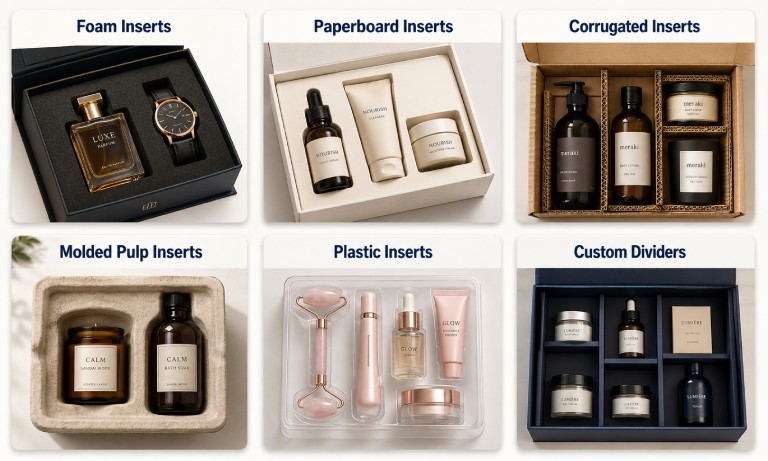
The most common types of inserts for boxes are foam, paperboard, molded pulp, plastic, and custom dividers. Each option has a different purpose, cost level, appearance, and level of protection.
Paperboard Inserts for Lightweight Retail Packaging
Paperboard inserts are lightweight, foldable, printable, and cost-effective. They are commonly used in folding cartons, cosmetic boxes, and retail packaging.
They can be die-cut, folded, printed, custom-printed, or made as platforms, slots, trays, or dividers. Paperboard works well for skincare bottles, cosmetic tubes, small jars, candle tins, food items, retail sets, and promotional kits. It is best for lightweight to moderately fragile products, but may need reinforcement for heavy glass items or delicate electronics.
Corrugated Inserts for Shipping Protection
Corrugated inserts are stronger paper-based inserts used when products need added support during shipping or handling. They are commonly used for bottles, jars, candles, glass products, e-commerce packaging, subscription boxes, food packaging, and heavier retail items.
Corrugated inserts can be made as dividers, partitions, pads, trays, or reinforced supports. They offer greater strength than standard paperboard and help reduce product-to-product contact within the box. They are especially useful for shipping boxes and mailers where protection is more important than a luxury display look.
Foam Inserts for Fragile and Luxury Products
Foam inserts provide strong cushioning and a fitted look for fragile, heavy, high-value, or irregularly shaped products. They are commonly custom-cut for glass bottles, perfume packaging, electronics, watches, jewelry, cosmetic jars, sample kits, and luxury gift sets.
Custom rigid boxes include EVA foam for a premium packaging experience, PE foam for protective support, and PU foam for softer cushioning. Custom foam inserts can also be wrapped with velvet, satin, paper, or fabric for a more luxurious finish. Foam offers strong protection and a premium, fitted look, but it is typically more costly than paperboard and may be less suitable for brands that prioritize plastic-free or paper-based packaging.
Molded Pulp Inserts for Sustainable Packaging
Molded pulp inserts are shaped paper-fiber inserts used for protective and eco-conscious packaging. They are suitable for candles, glass jars, bottles, cosmetics, electronics, food products, and sustainable gift sets.
They offer better-shaped support than flat paperboard and create a natural paper-based look. Molded pulp is ideal when brands want protection with a sustainable appeal, but custom tooling can increase costs, especially for small quantities.
Plastic Inserts for Clear Trays and Moisture Resistance
Plastic inserts are thermoformed trays that hold products in fixed positions. They are commonly used for cosmetics, electronics, beauty tools, retail kits, display packaging, medical-style products, and food-related packaging.
Custom plastic inserts are useful when products need precise cavities, smooth surfaces, clear visibility, or moisture resistance. They create a clean, organized presentation, but may not suit brands focused on reducing plastic use.
Custom Dividers for Multi-Product Packaging
Custom dividers create compartments inside a box and can be made from paperboard, corrugated board, rigid board, or plastic. They are used for bottle sets, candle sets, jar sets, food packaging, subscription boxes, e-commerce packaging, and multi-product kits.
Common styles include cross dividers, grid dividers, slotted dividers, corrugated dividers, and custom-shaped dividers. They are practical and cost-effective when products need separation but not a fully molded cavity.
How to Choose the Right Packaging Insert by Product Type
Choosing the right packaging insert depends on the product’s weight, shape, fragility, box style, shipping method, and presentation goals. A lightweight skincare set may only need a printed paperboard insert, while a glass candle, perfume bottle, or electronics kit may require foam, molded pulp, corrugated dividers, or a custom tray for better support.
The box insert should also align with the packaging's purpose. For e-commerce shipping, protection and fit are the priority. For retail, gifting, PR kits, or luxury packaging, the insert should also improve presentation and keep the product neatly displayed when the box is opened.
|
Insert Type |
Best Industry Fit |
Product Examples |
Choose This When |
|---|---|---|---|
|
Foam Inserts |
Luxury, electronics, jewelry, fragrance, premium gifting |
Perfume boxes, watch boxes, jewelry sets, electronics kits, glass dropper sets, PR gift boxes |
Choose foam when cushioning and premium presentation are more important than using a fully paper-based insert. |
|
Paperboard Inserts |
Cosmetics, skincare, retail, gifting, subscription packaging |
Skincare sets, cosmetic tube sets, lip balm packs, candle tins, retail gift boxes, sample kits |
The product is lightweight and needs neat placement, printable branding, or a cost-effective paper-based insert. |
|
Corrugated Inserts |
E-commerce, food, beverage, candles, shipping, and glass packaging |
Sauce bottle packs, honey jar sets, candle jar sets, beverage bottle packs, and glass product shipments |
Choose corrugated when products need stronger separation, stacking support, and shipping protection. |
|
Molded Pulp Inserts |
Sustainable packaging, candles, cosmetics, electronics, and food jars |
Candle jars, skincare jar sets, amber bottle sets, electronics accessory kits, and eco gift sets |
Use when the product needs shaped support and the brand wants a sustainable insert. |
|
Plastic Inserts |
Cosmetics, beauty, retail display, food, medical-style packaging |
Makeup kits, beauty tool sets, cosmetic applicator packs, retail blister-style kits, food sample trays |
The product needs transparent visibility, moisture resistance, smooth cavities, or precise tray placement. |
|
Custom Dividers |
Subscription, gifting, food, beverage, candles, multi-product kits |
Jam jar sets, candle sets, bottle-and-jar gift packs, mixed subscription boxes, sampler kits |
Multiple items need to stay separated inside one box without a fully molded tray. |
Expert Tip: For fragile or heavy products, always test the insert with the actual product sample before full production. Small differences in product size, weight, or box fit can affect how securely the item sits inside the packaging.
Common Packaging Insert Mistakes to Avoid
Even the right insert material can underperform if the fit, box structure, or product weight is not considered during design.
- Many choose inserts only for appearance. Prioritize secure support, not just looks, to hold the product safely.
- Leave minimal empty space inside the box. Excess space allows product movement, increasing the risk of shipping damage.
- Avoid weak inserts for heavy products. Weak inserts may bend or loosen, letting the product move inside.
- Design the insert and box together, not in isolation. Develop them as a unit to ensure proper fit and performance.
Test the insert as part of the whole packaging system, not as a separate add-on at the end.
Sustainable Box Insert Materials
The best insert materials for sustainable packaging are usually paperboard and molded pulp. Paperboard inserts are lightweight, printable, and often recyclable. Molded pulp inserts provide shaped protection with a natural paper-based appearance.
Corrugated dividers can also be a practical, sustainable option for bottle sets, jars, candles, and shipping boxes. They provide separation and strength while keeping the packaging paper-based.
Plastic and foam may still be necessary for some products, especially when protection, moisture resistance, or cushioning is more important. The best choice depends on the product’s fragility, weight, and shipping conditions.
The best packaging insert is not just the one that looks good inside the box; it is the one that fits the product correctly, supports the outer packaging, and protects the item through handling, storage, and delivery. By choosing the right insert material from the start, brands can reduce the risk of damage, improve product presentation, and create a more reliable packaging experience for customers.
FAQs About Packaging Inserts
Q: What is a packaging insert?
A: A packaging insert is a custom internal piece used to hold, separate, or display products inside packaging. It may be made from foam, paperboard, molded pulp, plastic, corrugated board, or other materials.
Q: What are the most common types of packaging inserts?
A: The most common types of packaging inserts are foam, paperboard, corrugated, molded pulp, plastic, and custom dividers. Foam is used for cushioning, paperboard for lightweight presentation, corrugated for shipping support, molded pulp for paper-based protection, plastic for shaped trays, and dividers for product separation.
Q: What is the best material for packaging inserts?
A: The best material depends on the product. Foam is best for cushioning fragile products. Paperboard is best for lightweight retail packaging. Molded pulp is best for sustainably shaped protection. Plastic is best for molded trays and moisture resistance. Dividers are best for separating multiple products.
Q: Are paperboard inserts recyclable?
A: Paperboard inserts are often recyclable, especially when they are not heavily laminated or mixed with non-paper materials. Recyclability depends on the material, coating, ink coverage, and local recycling facilities.
Q: Are foam inserts good for luxury packaging?
A: Yes, foam inserts are commonly used in luxury packaging because they provide strong protection and a fitted, premium look. They are often used for jewelry, watches, perfume bottles, electronics, and gift sets.
Q: What are molded pulp inserts used for?
A: Molded pulp inserts are used to hold and protect products inside packaging. They are commonly used for candles, glass jars, bottles, cosmetics, electronics, and sustainable packaging projects.
Q: What is the difference between inserts and dividers?
A: Inserts usually hold products in shaped cavities or fitted positions, while dividers separate products into compartments. Inserts offer a more custom fit, while dividers are simpler and often more cost-effective.
Q: Are corrugated inserts good for shipping fragile products?
A: Yes, corrugated inserts are useful for shipping fragile products because they add strength, separate items, and reduce product-to-product contact inside the box. They are commonly used for bottles, jars, candles, food packaging, and e-commerce shipments.
Professional Design & Printing Services
Printingblue offers customized commercial printing solutions to meet your business needs. Our expert team delivers top-notch design and printing services that exceed expectations. Contact us today for a free consultation.