How to Choose the Right Product Packaging for Your Product
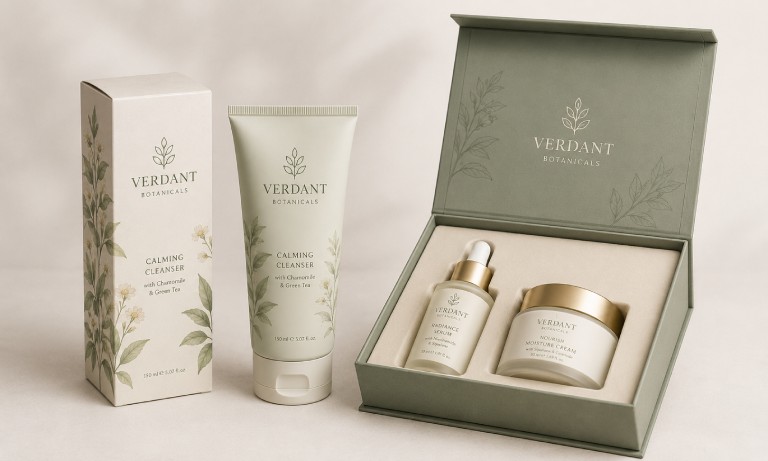
Choosing product packaging is not just about picking a box style. It should be planned around the product’s size, weight, fragility, sales channel, and brand position so the final package feels practical, protective, and easy to understand.
Img Alt Txt (Custom product packaging for skincare products, including printed carton, cosmetic tube, and rigid box with insert)
For example, a skincare cream tube may only need a printed folding carton, while a glass candle jar may need a stronger corrugated box with an insert or divider. A premium gift set may require a rigid box or mailer-style kit, while a small retail item may need a display box, sleeve, or printed carton for shelf visibility.
Good product packaging conveys brand values, protects the product, and builds customer trust.
Start With the Product, Not the Box
Many packaging problems occur when brands choose a box style first and then try to fit the product into it. A better approach is to review the actual product before choosing the packaging structure.
A skincare bottle, soap bar, candle jar, food pouch, electronics accessory, and subscription kit all have different needs. Some products need upright positioning. Some need surface protection. Some need separation between items. Some need a strong front panel for a retail display. Others need a clean opening experience for gifting or subscription packaging.
Before choosing the box, confirm the product’s size, weight, shape, fragility, surface finish, and whether it is sold as a single item or part of a set. This helps avoid oversized boxes, weak inserts, poor product layout, and unnecessary finishing costs.
Expert Tip: Do not choose packaging finishes until the structure is confirmed. Foil, embossing, spot UV, or soft-touch coating can improve appearance, but they cannot fix poor fit, weak material, or product movement inside the box.
Match Packaging to the Sales Channel
Product packaging should match where the product will be seen, handled, and opened. A retail product needs strong shelf presence, readable information, and a clear front-facing design. An e-commerce product needs a secure fit and a clean unboxing experience. A gift set or PR kit may need a more premium structure and a stronger inside presentation.
This is why one packaging style rarely works for every product or channel. A folding carton may work well for a cosmetic tube on a retail shelf, while a corrugated mailer box may be better for a skincare kit sold online. A rigid box may be suitable for high-value gifts, but it may be unnecessary for a lower-cost product where a well-designed carton and insert can do the job.
The sales channel should guide the packaging structure before artwork and finishes are finalized.
Choose the Right Product Packaging Structure
Once the product requirements and sales channel are clear, choose the structure that meets the main packaging need without overbuilding on cost, materials, or finishes. The right format should support the product physically while also matching the brand’s presentation goals and production budget.
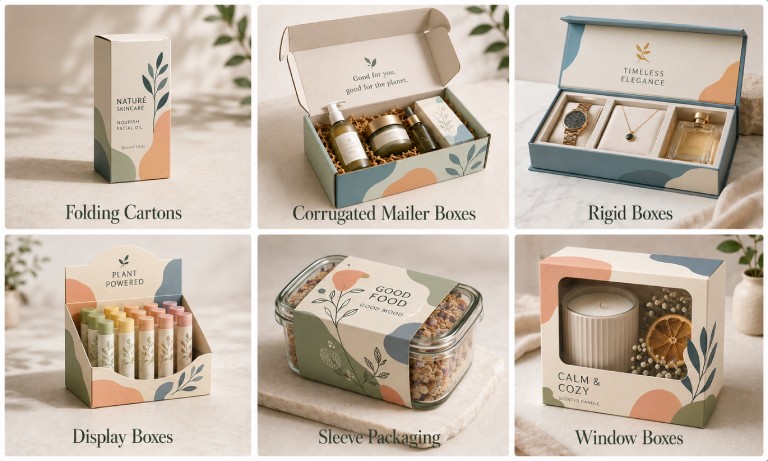
Folding cartons work well for lightweight retail products such as skincare tubes, cosmetic cartons, soap bars, supplement bottles, candle tins, small food packs, and personal care products. Custom folding cartons are custom printable, cost-effective, and suitable when the product does not need heavy-duty internal support.
Rigid boxes are better for premium products, luxury gift sets, PR kits, jewelry, watches, high-end cosmetics, and products where presentation is a major part of the customer experience. Custom rigid boxes create strong perceived value, but they usually cost more and take more space than folding cartons.
Corrugated mailer boxes are useful for e-commerce products, subscription kits, skincare sets, candles, apparel, and product bundles. Custom mailer boxes combine product presentation with a stronger structure and can work well with paperboard inserts, corrugated dividers, molded pulp trays, or foam inserts.
Display boxes are suitable for retail counters, sample packs, small cosmetics, snacks, promotional products, and impulse-buy items. They are designed to help products stand out in-store and make merchandising easier.
Sleeve packaging works well when an existing product box, tray, jar, pouch, or container needs extra branding, product information, campaign messaging, or a cleaner retail presentation without changing the main structure.
Img Alt Txt (Product packaging mockup showing folding cartons, corrugated mailer boxes, rigid boxes, display boxes, sleeve packaging, and window boxes.)
Use Packaging Inserts When Products Need Support or Positioning
Some packaging fails not because the outer box is wrong, but because the product moves inside it. Inserts, dividers, trays, and platforms help keep products fixed, separated, upright, and better presented.
A skincare set may need a paperboard insert to hold bottles neatly. A candle jar may need molded pulp, foam, or corrugated support. A perfume bottle may need a snug cavity. An electronics kit may need separate spaces for the device, cable, and accessories. A subscription box may need dividers or compartments to keep mixed products organized.
For products that need fixed placement, fitted compartments, or multi-item separation, review your packaging inserts options before finalizing the outer box.
Expert Tip: For product sets, confirm the internal layout before finalizing the box size. The insert, divider, and product order can affect both the final packaging size and the unboxing experience.
Choose Packaging Materials Based on Product Needs
Packaging material should be selected according to product weight, strength requirements, print quality, sustainability goals, and budget. The most premium-looking material is not always the best choice. The goal is to use the most practical material that supports both the product and the brand experience.
For example, white paperboard is often better when color accuracy and clean graphics matter, while kraft paperboard works well for natural or eco-positioned products. Corrugated board is better suited to heavier product kits or products that require stronger handling support. Rigid board should be reserved for premium lines, gift sets, or products where presentation justifies the added cost.
Material choice should always be tested against product weight, product shape, and packaging purpose. A material that bends, collapses, or fails to hold the product can damage both the product's presentation and customer trust.
Make Product Packaging Sell Without Overdesigning It
Packaging helps sell when it makes the product easy to choose and trust. This does not always require heavy decoration or expensive finishes.
For many products, a strong front panel, clean typography, a clear product name, a consistent color palette, a readable label, and good material choice are more important than adding multiple premium effects. Too many finishes can make packaging look busy, increase cost, and distract from the product message.
A cost-smart premium look can come from a matte finish, soft-touch coating, spot UV on the logo, foil on one key detail, an embossed brand name, a clean sleeve, or a printed insert. The best finish is the one that supports the brand without overpowering the product.
Best Packaging Types for Different Product Needs
Use product type as the starting point when choosing packaging. The table below shows practical packaging structures and what to watch for before production.
|
Packaging Type |
Best For Product Types |
Key Packaging Priority |
|---|---|---|
|
Folding cartons |
Tubes, soap bars, supplement bottles, cosmetic cartons, small food packs, candle tins |
Keep lightweight products neatly packed with clear branding, readable information, and cost-effective retail presentation. |
|
Corrugated mailer boxes |
Skincare kits, candle jars, subscription boxes, apparel, food jars, product bundles |
Provide stronger structure, better product fit, and a branded opening experience for shipped or bundled products. |
|
Rigid boxes |
Gift sets, PR kits, jewelry, watches, premium cosmetics, and luxury product launches |
Create a premium reveal, support high perceived value, and organize products with inserts or compartments. |
|
Display boxes |
Lip balms, sachets, small cartons, snack packs, cosmetic samples, promotional items |
Improve shelf visibility, group products neatly, and make merchandising easier in stores. |
|
Sleeve packaging |
Pouches, trays, jars, cartons, soap bars, food packs, campaign packs |
Add branding, product information, or campaign messaging without changing the main product container. |
|
Window boxes |
Bakery items, candles, cosmetics, toys, retail products, gift items |
Show the product while keeping it packaged, branded, and shelf-ready. |
|
Packaging inserts and dividers |
Bottles, jars, glass items, electronics accessories, multi-product sets |
Hold products in fixed positions, separate items, and improve internal presentation. |
Common Product Packaging Mistakes to Avoid
One common mistake is choosing packaging based solely on appearance. A box can look attractive but still fail if it does not fit the product, support the product's weight, or align with the sales channel.
Another mistake is using one box style for too many products. This often leads to oversized packaging, too much filler, poor product positioning, or inconsistent presentation. A better approach is to group products by size, weight, and packaging purpose before choosing the structure.
Brands also sometimes overuse premium finishes before getting the basics right. If the product moves inside the box, the label is hard to read, or the box feels too large, extra decoration will not solve the main issue. Finalize the structure, material, insert, and product layout before deciding on decorative finishes.
If the box feels oversized or needs too much filler, review your packaging right-sizing before changing materials or adding premium finishes.
Need Help Choosing Product Packaging?
Printingsquare can help you choose product packaging that fits your product, not just a standard box style. Whether you need folding cartons, corrugated mailer boxes, rigid boxes, display boxes, sleeves, inserts, or product labels, our team can recommend a structure based on your product size, weight, sales channel, presentation goals, and budget.
For a more accurate recommendation, share your product dimensions, weight, quantity, packaging goal, preferred material, artwork status, and any requirements for inserts, dividers, windows, labels, sleeves, or finishes. We’ll help suggest packaging that fits, protects, and presents your product better.
FAQs About Product Packaging
Q: What is product packaging?
A: Product packaging is the material and structure used to contain, protect, present, and communicate information about a product. It can include boxes, cartons, mailers, sleeves, labels, inserts, dividers, trays, and finishes.
Q:How do I choose the right product packaging?
A: Choose product packaging by reviewing the product’s size, weight, fragility, sales channel, branding needs, budget, and whether it requires inserts or dividers. The right packaging should fit the product, protect it properly, and support how it will be sold.
Q: What type of box is best for product packaging?
A: The best box depends on the product. Folding cartons work well for lightweight retail products; corrugated mailer boxes work well for e-commerce kits; rigid boxes suit premium items; and display boxes help products stand out in retail settings.
Q: Do product boxes need inserts?
A: Product boxes need inserts when the item must stay fixed, separated, upright, or protected inside the package. Inserts are especially useful for bottles, jars, candles, cosmetics, electronics, gift sets, and subscription kits.
Q: How can product packaging look premium without high cost?
A: Product packaging can look premium with a clean structure, an accurate fit, strong artwork, a good material choice, and one or two focused finishes, such as matte lamination, spot UV, foil on the logo, embossing, or a printed insert.
Q: What information is needed for a product packaging quote?
A: A product packaging quote usually requires product dimensions, product weight, quantity, box style, material preference, printing requirements, artwork files, insert needs, finish options, and intended use (e.g., retail, gifting, e-commerce, or display).
Professional Design & Printing Services
Printingblue offers customized commercial printing solutions to meet your business needs. Our expert team delivers top-notch design and printing services that exceed expectations. Contact us today for a free consultation.